Quenching the Data Center Thirst for Power Is Now a Solvable Problem
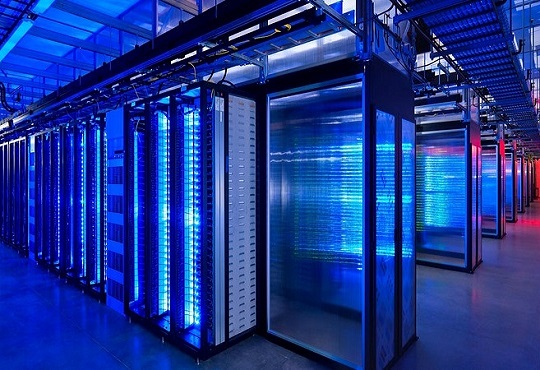
For more than a decade, data centers have been described as insatiable consumers of electricity—digital factories whose appetite for power grows faster than grids can expand. The rise of cloud computing, hyperscale services, cryptocurrency mining, and now artificial intelligence has only intensified this concern. Headlines regularly warn of looming power shortages, overloaded grids, and environmental consequences tied to the rapid expansion of data center infrastructure.
Yet a shift is underway. What once seemed like an unavoidable crisis is increasingly becoming a manageable, solvable engineering and planning challenge. Advances in energy efficiency, grid integration, renewable generation, cooling technologies, and AI-driven optimization are transforming how data centers consume—and even produce—power.
The data center power problem hasn’t disappeared, but it has evolved. And crucially, solutions are now practical, scalable, and economically viable.
Understanding the Power Challenge
To understand why the problem is now solvable, it’s important to understand what made it so difficult in the first place.
Modern data centers consume enormous amounts of electricity because they perform three energy-intensive functions simultaneously:
- Compute – Running servers, GPUs, and specialized accelerators
- Cooling – Removing the heat generated by dense computing hardware
- Reliability systems – Power conditioning, redundancy, and backup
As AI workloads exploded, particularly those involving large language models and real-time inference, power density per rack increased dramatically. Some modern AI clusters require ten times more power than traditional enterprise servers.
The fear was simple: demand would outpace supply, forcing utilities, communities, and governments into impossible tradeoffs.
But that assumption ignored a key reality—technology rarely scales linearly.
Efficiency Gains Are Outpacing Demand Growth
One of the most overlooked facts in discussions about data center power is this: efficiency improvements are accelerating faster than raw demand growth.
Compute Efficiency
Modern processors deliver vastly more performance per watt than previous generations. AI accelerators, GPUs, and custom silicon are optimized for specific workloads, reducing wasted computation.
Instead of running generic CPUs at high utilization, data centers now deploy specialized hardware that completes tasks faster using less energy overall.
Virtualization and Consolidation
Cloud architecture allows workloads to be consolidated onto fewer physical machines. Idle servers—which once wasted significant power—are increasingly rare in well-managed facilities.
Power Usage Effectiveness (PUE) Improvements
A decade ago, many data centers had PUE ratios above 2.0, meaning as much energy went into overhead as into computing. Today, leading facilities operate at PUEs near 1.1 or even lower.
This means nearly all consumed power is used for productive work rather than waste.
Efficiency alone does not eliminate power demand—but it drastically changes its trajectory.
The Cooling Revolution: Less Energy, More Control
Cooling has historically been one of the largest energy drains in data centers. That is no longer the case.
Liquid Cooling Goes Mainstream
Air cooling struggles with modern high-density racks. Liquid cooling—once niche—is now becoming standard for AI and HPC environments.
Liquid cooling systems:
- Remove heat more efficiently
- Reduce fan energy
- Enable higher rack densities without proportional power increases
Immersion Cooling
In some facilities, servers are fully submerged in non-conductive fluids that absorb heat directly. These systems dramatically reduce cooling overhead and enable heat reuse.
Free Cooling and Climate Optimization
Modern data centers increasingly use outside air, evaporative cooling, or geographic placement to minimize mechanical cooling.
Cooling is no longer a brute-force problem—it is a precision engineering discipline.
AI Is Optimizing the Data Center Itself
Ironically, the same AI workloads driving power demand are now being used to optimize energy consumption.
AI systems manage:
- Workload scheduling to avoid peak grid demand
- Dynamic voltage and frequency scaling
- Predictive maintenance to prevent energy waste
- Real-time cooling optimization based on thermal patterns
Instead of static power models, data centers now operate as adaptive systems that respond to conditions in milliseconds.
This intelligence reduces waste, smooths demand spikes, and improves grid compatibility.
The Grid Is Evolving Too
The assumption that data centers simply “pull” power from the grid is outdated.
Flexible Load Participation
Modern data centers can adjust power usage dynamically, reducing load during grid stress and increasing it when renewable generation is abundant.
This turns data centers into grid stabilizers, not just consumers.
On-Site Generation
Many facilities now deploy:
- Solar farms
- Wind generation
- Gas turbines
- Fuel cells
On-site generation reduces grid dependency and provides resilience during outages.
Energy Storage
Battery systems—originally designed for backup—are increasingly used for:
- Peak shaving
- Load shifting
- Frequency regulation
In some regions, data centers actively participate in energy markets, selling services back to utilities.
Renewables Are No Longer a Constraint
For years, critics argued that renewable energy could not support data center growth due to intermittency. That argument is rapidly losing relevance.
Scale Matters
Hyperscale data center operators are among the world’s largest buyers of renewable energy. Their long-term contracts enable the construction of new solar and wind projects at unprecedented scale.
24/7 Clean Energy Matching
The industry is moving beyond annual renewable offsets toward hourly matching, aligning consumption with clean generation in real time.
Hybrid Energy Models
Renewables paired with storage, grid power, and dispatchable generation create resilient energy portfolios that balance cost, reliability, and sustainability.
Renewable energy is no longer a symbolic gesture—it is a structural component of data center power strategies.
Heat Reuse Turns Waste into Value
One of the most exciting developments in data center energy management is heat reuse.
Instead of venting waste heat into the atmosphere, modern facilities are capturing it to:
- Heat homes and offices
- Support industrial processes
- Power district heating systems
In cold climates, data centers are becoming net contributors to local energy ecosystems.
This reframes the conversation entirely: data centers are not just energy consumers—they are energy nodes.
Regulation Is Catching Up with Reality
Governments and regulators are shifting from reactive restrictions to collaborative planning.
Rather than blocking data center construction due to power concerns, many regions now:
- Require energy efficiency benchmarks
- Incentivize on-site generation
- Coordinate grid upgrades alongside development
- Encourage data center clustering for shared infrastructure
This proactive approach reduces conflict and aligns growth with long-term energy planning.
Economic Incentives Align with Sustainability
Perhaps the strongest argument that the power problem is solvable is this: the financial incentives now favor efficiency.
Electricity is one of the largest operational costs for data centers. Every watt saved directly improves margins.
As a result:
- Operators invest heavily in efficiency
- Vendors compete on performance per watt
- Innovation is rewarded economically, not just environmentally
When sustainability aligns with profitability, progress accelerates.
Smaller, Smarter, and More Distributed
The future of data centers is not just about massive hyperscale facilities.
Edge Data Centers
Smaller, localized facilities reduce latency and distribute power demand more evenly across regions.
Modular Design
Prefabricated data centers enable rapid deployment with optimized power and cooling systems.
Geographic Optimization
Workloads can be placed where power is cheapest, cleanest, or most abundant—reducing strain on any single grid.
This distributed approach increases resilience and flexibility.
What Still Needs Work
Calling the problem “solvable” does not mean it is fully solved.
Challenges remain:
- Grid infrastructure upgrades take time
- Community concerns must be addressed transparently
- AI workloads will continue to grow rapidly
- Standardization across regions is uneven
But these are engineering, policy, and planning challenges—not existential roadblocks.
The difference matters.
Why the Narrative Must Change
The persistent narrative that data centers are an uncontrollable drain on power is outdated and counterproductive.
It:
- Discourages investment
- Oversimplifies complex systems
- Ignores rapid technological progress
A more accurate narrative recognizes that data centers are becoming some of the most energy-aware facilities ever built.
They are pushing innovation in power electronics, grid integration, and sustainability faster than many traditional industries.
The Bigger Picture: Digital Infrastructure as Energy Infrastructure
As societies digitize, data centers become as fundamental as roads, ports, and power plants.
The question is not whether they will consume energy—but how intelligently that energy is produced, managed, and reused.
Increasingly, the answer is: very intelligently.
Conclusion: A Solvable Problem, Actively Being Solved
The data center thirst for power is real—but it is no longer an unsolvable crisis.
Through:
- Dramatic efficiency gains
- Advanced cooling technologies
- AI-driven optimization
- Renewable energy integration
- Grid collaboration
- Heat reuse
- Economic alignment
The industry has transformed a looming constraint into a manageable system.
What once looked like an inevitable collision between digital growth and energy limits is now a story of adaptation, innovation, and progress.
The challenge ahead is not to stop data centers from growing—but to continue building them smarter than ever before.
And for the first time, we can say with confidence:
quenching their thirst for power is a solvable problem.
About the Author