IAmazon Brings Alexa+ to the Web as AI Competition Heats Up
The artificial intelligence arms race is no longer confined to smartphones, smart speakers, or cloud APIs. It is rapidly becoming a platform war, and Amazon’s decision to bring Alexa+ to the web marks a pivotal moment in that battle. As generative AI reshapes how people search, work, shop, and communicate, Amazon is repositioning Alexa from a voice assistant tied to Echo devices into a cross-platform AI companion designed to compete head-to-head with ChatGPT, Google Gemini, Microsoft Copilot, and Apple’s next-generation Siri.
This move is not just about convenience. It’s about relevance, survival, and leadership in an AI ecosystem where users increasingly expect intelligent assistants to be available everywhere—on phones, laptops, browsers, and enterprise tools. Alexa+, Amazon’s AI-enhanced evolution of Alexa, represents a strategic reset for a product that once dominated smart homes but struggled to find momentum in the generative AI era.
As AI competition intensifies, Amazon’s expansion of Alexa+ to the web signals a broader ambition: to transform Alexa into a true general-purpose AI assistant—not just a voice interface for weather updates and smart lights, but a reasoning engine capable of research, planning, commerce, and productivity.
From Smart Speaker to AI Platform: Alexa’s Long Road
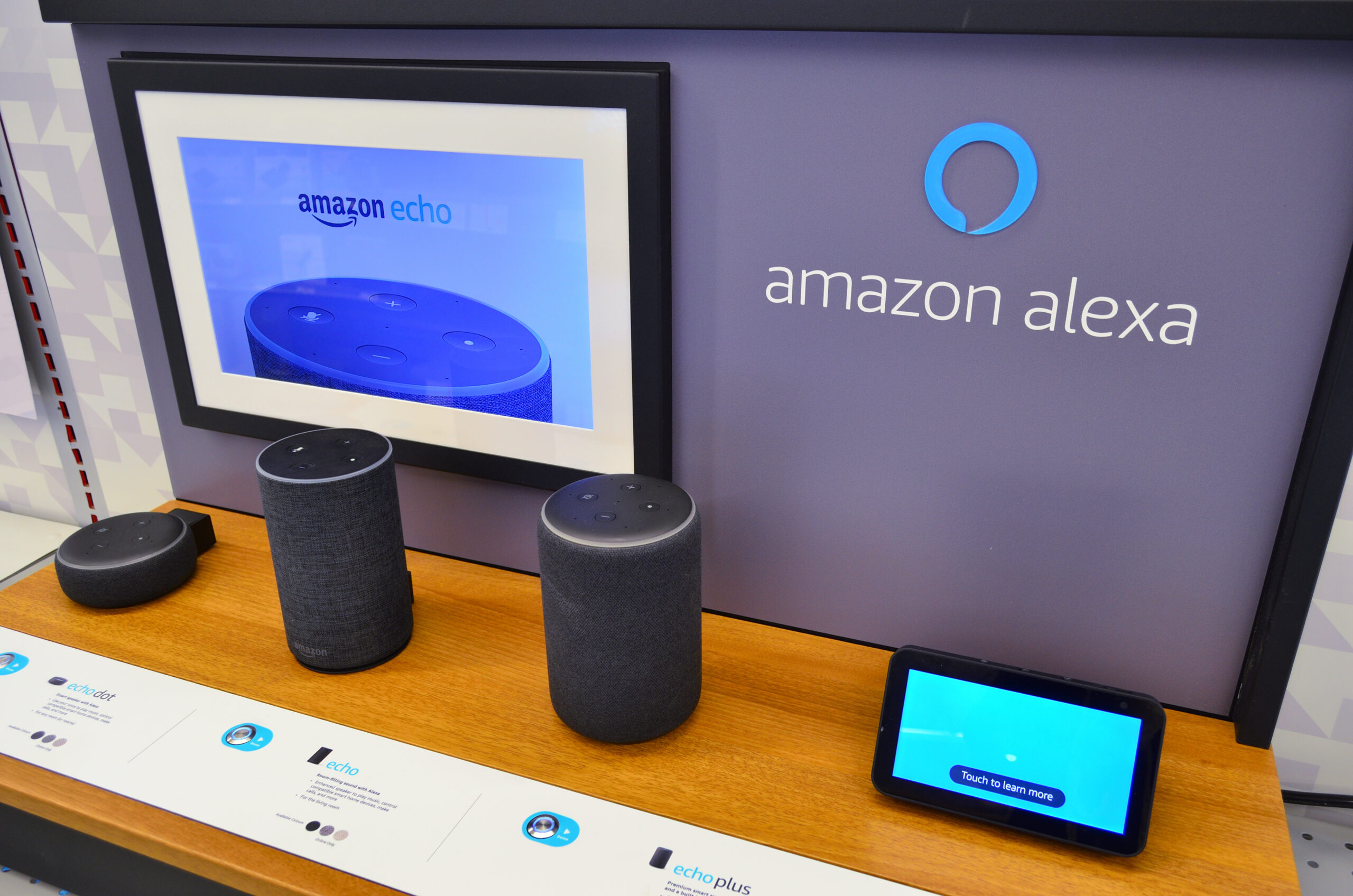
Alexa was once Amazon’s most visible consumer AI product. At its peak, Echo devices defined the smart speaker market, and “Alexa” became synonymous with voice assistants. But as large language models exploded into public awareness, Alexa began to feel outdated.
While competitors raced ahead with conversational AI that could write, reason, and synthesize information, Alexa remained largely task-oriented and command-based. Asking Alexa to play music or set a timer worked well, but asking it to analyze information or help with complex tasks often led to frustrating results.
Internally, Amazon recognized the problem. Voice assistants built on rule-based systems and limited natural language processing were no longer enough. The AI world had moved on—and users had moved with it.
Alexa+ is Amazon’s answer to that challenge.
What Is Alexa+?
Alexa+ is not a simple update—it is a reimagining of Alexa powered by large language models and generative AI. Instead of responding with short, scripted answers, Alexa+ is designed to:
- Hold natural, multi-turn conversations
- Understand context and intent more deeply
- Generate original responses instead of relying on pre-written templates
- Assist with planning, summarization, and decision-making
- Integrate more tightly with Amazon’s ecosystem, including shopping, services, and smart devices
In essence, Alexa+ moves Alexa closer to the class of AI assistants that users now associate with chat-based tools rather than voice-only interfaces.
Bringing Alexa+ to the web is the next logical step in this evolution.
Why the Web Matters More Than Ever
For years, Alexa lived primarily inside hardware—Echo speakers, Fire TVs, and select mobile apps. That approach made sense when voice was the primary interface. But today’s AI competition is being fought in browsers, tabs, and workflows.
ChatGPT, Gemini, and Copilot gained traction because they met users where they already were: on laptops, desktops, and the web. People now expect AI to help them:
- Research topics while browsing
- Draft emails and documents
- Summarize long articles
- Compare products
- Solve problems in real time
By bringing Alexa+ to the web, Amazon is acknowledging a critical truth: AI assistants must be omnipresent, not device-bound.
The web version of Alexa+ allows users to interact with Amazon’s AI through a familiar chat-style interface, breaking Alexa free from the limitations of voice-only use and physical hardware.
A Strategic Response to Fierce AI Competition
Amazon’s timing is no coincidence. The AI landscape has become intensely competitive, with every major tech company staking its future on intelligent assistants.
- OpenAI has turned ChatGPT into a daily tool for millions
- Google is embedding Gemini deeply into Search, Workspace, and Android
- Microsoft has positioned Copilot as the AI layer across Windows and Office
- Apple is preparing a major Siri overhaul powered by advanced models
In this environment, a static voice assistant would quickly become irrelevant.
Alexa+ on the web allows Amazon to compete on equal footing—not just in smart homes, but in knowledge work, commerce, and everyday productivity.
Commerce at the Core: Amazon’s Unique Advantage
What truly differentiates Alexa+ from other AI assistants is Amazon’s commerce DNA.
While most AI tools focus on information and productivity, Amazon sits at the center of global e-commerce. Alexa+ is uniquely positioned to blend conversational AI with shopping in ways competitors cannot easily replicate.
On the web, Alexa+ can:
- Help users research products across categories
- Compare prices, features, and reviews
- Make personalized recommendations based on shopping history
- Assist with subscriptions, reorders, and returns
- Act as a conversational shopping advisor rather than a search bar
This is where Amazon’s long-term strategy becomes clear. Alexa+ is not just an assistant—it is a commerce intelligence layer that can guide decisions before a purchase ever happens.
If successful, Alexa+ could fundamentally change how people shop online, shifting from keyword-based searches to guided, conversational experiences.
From Voice to Multimodal Intelligence
Another key reason for bringing Alexa+ to the web is the shift toward multimodal AI.
Voice alone is limiting. On the web, Alexa+ can incorporate:
- Text input for precision and speed
- Visual responses such as lists, tables, and summaries
- Links, citations, and references
- Interactive elements like checklists or comparisons
This transforms Alexa+ from a background assistant into an active thinking partner—one that can help users plan trips, analyze information, or manage tasks more effectively.
The web interface also makes Alexa+ accessible in environments where voice is impractical, such as offices, classrooms, or shared spaces.
Reinventing Alexa’s Reputation
For Amazon, Alexa+ is also about perception.
In recent years, Alexa has often been viewed as “behind” other AI tools—useful for simple commands but lacking intelligence. By launching Alexa+ on the web, Amazon is sending a clear message: Alexa is no longer just a smart speaker assistant; it’s a modern AI system.
This matters not only to consumers but to developers, partners, and enterprises deciding which AI ecosystems to invest in.
Challenges Amazon Must Overcome
Despite the promise of Alexa+, significant challenges remain.
1. Trust and Accuracy
Users now expect AI assistants to provide reliable, well-reasoned answers. Any hallucinations or inaccuracies could quickly erode trust, especially when recommendations influence purchases.
2. Differentiation
With many AI assistants offering similar capabilities, Amazon must clearly articulate why Alexa+ is different—and better.
3. Privacy Concerns
Alexa already carries a reputation for listening devices. Expanding to the web raises questions about data usage, personalization, and transparency.
4. User Habits
Convincing users to choose Alexa+ over established tools like ChatGPT or Gemini will require clear advantages and seamless experiences.
Implications for the Broader AI Ecosystem
Amazon’s move reflects a broader trend: AI assistants are becoming platforms, not features.
As companies race to embed AI into every surface—browsers, operating systems, apps—the winners will be those that offer:
- Consistent cross-platform experiences
- Deep ecosystem integration
- Trustworthy, high-quality outputs
- Clear value beyond novelty
Alexa+ on the web contributes to this shift, reinforcing the idea that the future of AI lies in ubiquity and utility, not just innovation.
What This Means for Users
For everyday users, Alexa+ on the web could mean:
- Easier access to Amazon’s AI without needing an Echo device
- A conversational alternative to traditional web search
- More personalized assistance across shopping, planning, and information tasks
- A unified AI experience across voice, mobile, and desktop
If Amazon executes well, Alexa+ could become a default companion for users already embedded in the Amazon ecosystem.
What This Means for Amazon
Strategically, this move strengthens Amazon in several ways:
- It revitalizes Alexa as a core AI asset
- It extends Amazon’s reach into daily digital workflows
- It creates new monetization opportunities beyond hardware
- It positions Amazon as a serious contender in general-purpose AI
Most importantly, it ensures Amazon is not left behind as AI becomes the primary interface for interacting with technology.
The Bigger Picture: AI as the New Front Door
The launch of Alexa+ on the web reflects a larger shift in how people interact with the internet.
Search boxes, menus, and apps are giving way to conversational interfaces. Instead of navigating systems, users increasingly expect systems to understand them.
In this world, the assistant that controls the conversation controls the experience.
By expanding Alexa+ beyond hardware and into the browser, Amazon is staking its claim at the front door of the AI-powered internet.
Conclusion: A Necessary and Strategic Evolution
Amazon bringing Alexa+ to the web is not just a product update—it is a strategic necessity in an era where AI assistants define user engagement.
As competition intensifies, Alexa+ represents Amazon’s effort to reclaim relevance, leverage its unmatched commerce ecosystem, and position itself as a leader in the next generation of AI interaction.
Whether Alexa+ can stand out in a crowded field remains to be seen. But one thing is clear: the battle for AI dominance is no longer about who builds the smartest model—it’s about who shows up everywhere users need intelligence.
With Alexa+ on the web, Amazon has taken a decisive step into that future.
About the Author