In the fast-changing world of personal computing, legacy and innovation must coexist. Few tech companies exemplify this challenge better than Dell Technologies, a firm that’s spent decades building hardware for consumers, professionals, and enterprise customers alike. At the heart of this story lies a single brand — XPS — and a strategic reset at Dell that underlines the importance of strong identity in today’s competitive PC market.
In 2025, Dell announced a major rebranding of its PC portfolio. The company retired beloved names such as XPS, Inspiron, and Latitude in favor of a simplified scheme with labels like Dell, Dell Pro, and Dell Pro Max. But one year later, at CES 2026, Dell publicly reversed course, bringing the XPS brand back from hiatus in a move that signals both humility and renewed strategic focus.
Why Dell Dropped XPS — and What Went Wrong
o understand the significance of Dell’s reset, it’s crucial to go back to early 2025. At that year’s Consumer Electronics Show (CES), Dell unveiled a streamlined brand architecture intended to simplify buying decisions and align its lineup with broader industry trends. The company consolidated its PC offerings under a three-tier naming scheme: Dell for mainstream devices, Dell Pro for business-oriented machines, and Dell Pro Max for high-performance workstations.
The move was bold — and risky.
The XPS brand had been synonymous with premium Windows laptops for years. With roots stretching back decades, XPS stood for craftsmanship, cutting-edge design, powerful performance, and strong reviews from tech media and enthusiasts alike. Replacing such a well-regarded name with generic tiers was always going to be controversial.
That controversy quickly turned into real market consequences:
- Customers were confused by the new names, which lacked the emotional and historical resonance of XPS.
- Industry analysts questioned whether a stripped-down branding approach would dilute Dell’s premium appeal.
- Sales momentum softened, especially in the high-end laptop segment where brand identity matters most.
Ultimately, Dell recognized that in attempting to simplify, it had oversimplified. The company had lost something unique — a brand halo that helped it stand out against competitors like Apple’s MacBook line, Lenovo’s ThinkPad/X1 series, and premium offerings from HP and ASUS.
CES 2026: The Public Apology and Strategic Reset
One of the most striking aspects of Dell’s announcement at CES 2026 wasn’t just the return of the XPS brand — it was the tone of acknowledgment from leadership.
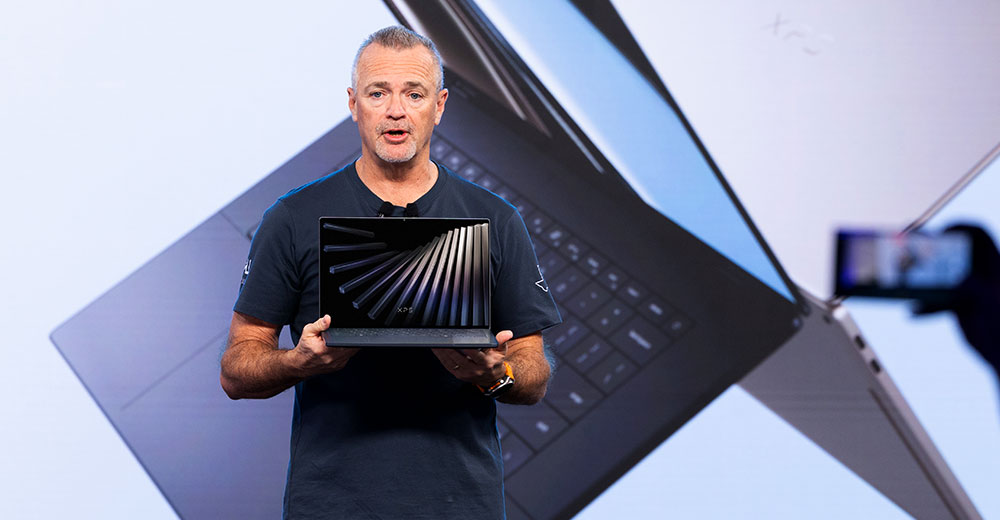
Dell Vice Chairman and COO Jeff Clarke didn’t sugarcoat the company’s missteps. He openly admitted that the previous PC strategy had “gone off course” and that Dell “underperformed” in 2025. In a rare corporate apology, Clarke acknowledged that customers and industry voices were right about the importance of the XPS name.
This candid admission marked a shift from typical industry speak. Dell wasn’t just relaunching a product name — it was publicly resetting priorities. The message was clear: Dell had listened, learned, and was now course-correcting based on market feedback.
XPS Is Back: Reimagined for Today’s PC Buyer
At CES 2026, Dell introduced the new XPS notebook lineup, featuring the XPS 14 and XPS 16 as its first wave of refreshed premium laptops. These new models reflect more than a brand revival — they embody modern design philosophy and technology alignment.
1. Premium Design and Build
The new XPS devices are unmistakably premium:
- CNC-machined aluminum chassis adds rigidity and a high-end feel.
- Gorilla Glass displays and narrow bezels enhance the visual experience.
- XPS logo placement on the lid signals confidence — no longer a “Dell Premium” label dressed up, but a true XPS product.
These design choices make a clear statement: XPS isn’t just a name — it’s an identity. Purchasing an XPS device should feel distinct from buying a run-of-the-mill PC.
2. Performance and Efficiency
Under the hood, the new XPS line leverages Intel’s Core Ultra Series 3 processors and integrated Intel Arc graphics. This configuration delivers significant performance gains — with up to 50 % faster graphics and meaningful improvements in AI workloads compared to previous iterations.
Battery life claims are also impressive:
- Up to 27+ hours of Netflix streaming, and
- Over 40 hours of local video playback in optimized scenarios.
These stats show a focus on practical user experience — long battery life and performance that matters in daily tasks.
3. Thoughtful Hardware Choices
Dell has corrected several past criticisms with real hardware changes:
- Physical function keys replace unpopular touch-sensitive buttons.
- Visible, etched trackpad borders address a longstanding usability gripe.
- Modular USB-C ports and enhanced cooling systems target both performance and serviceability.
These aren’t superficial tweaks — they respond directly to user feedback accumulated over years of community and expert critique.
Strategic Implications: What This Reset Means for Dell
Dell’s decision to bring back XPS isn’t just about naming. It reflects a broader strategic reset with multiple implications:
1. Confidence in Premium Consumer PCs
Dell is signaling that it still values its consumer and prosumer segments. While business and enterprise PCs remain critical, the company isn’t abandoning the mainstream premium market. Bringing XPS back is a declaration of continued investment in this space.
2. Balancing AI Hype with Practical Messaging
Interestingly, Dell’s 2026 messaging shows a restrained approach to AI branding. While the new XPS models include hardware capable of AI tasks — such as NPUs and advanced silicon — Dell executives acknowledged that customers weren’t buying laptops just because they had “AI inside.” Instead, the focus remains on everyday performance, battery life, and usability — the tangible benefits that users understand and care about.
This is a strategic pivot of its own. Dell isn’t abandoning AI; rather, it’s decoupling marketing hype from customer reality. AI becomes a feature that enhances performance, not a primary selling point that confuses buyers.
3. Learning from Feedback — A Competitive Advantage
Dell’s public acknowledgment that it listened to customers enhances credibility. Too often, large companies ignore market reactions; Dell’s reset shows a willingness to adapt. This could help Dell rebuild trust with loyal users who felt alienated by the previous rebrand.
Challenges and Skepticism Ahead
While the strategic reset has garnered positive industry attention, Dell still faces challenges:
- Market Competition: Premium laptops face stiff competition from Apple, Lenovo, ASUS, HP, and others. A revived XPS brand must deliver not just nostalgia, but best-in-class performance and value to capture share.
- Price Sensitivity: Early pricing for the XPS 14 and XPS 16 starts at over $2,000 — a premium tier where customers expect excellence. Convincing buyers to spend that money requires real perceived value.
- Brand Clarity: Dell must avoid further confusion in its lineup. With multiple tiers like Dell, Dell Pro, and Alienware (for gaming), carving out distinct identities — and stickiness — remains paramount.
Despite these headwinds, Dell’s move to reset strategy and revive XPS is a bold step that aligns the company with its heritage while embracing modern buyer expectations.
Conclusion: A Strategic Reset Rooted in Reality
Dell’s return to the XPS brand represents a major inflection point in its PC strategy. What began as a controversial rebrand in 2025 — one that removed beloved product names — has evolved into a public reset that acknowledges missteps, responds to feedback, and reinvests in identity.
At CES 2026, Dell didn’t just unveil new laptops; it rebuilt confidence in one of the tech industry’s most recognized premium names. By combining refined design, thoughtful hardware improvements, and honest market positioning, Dell is aiming not just to win back past customers, but to sharpen its competitive edge in a challenging PC market.
In an era where technology companies often chase trends, Dell’s strategic reset — anchored by a human-centered understanding of brand value — may prove future-defining.
About the Author